

HR Beams for Industrial Go-downs: Structural Safety Guide Kenya | BHD 2026
Quick answer
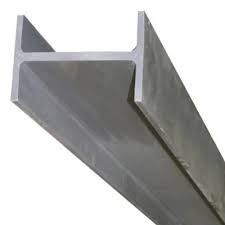
Hot-rolled H and I beams form the main frame of an industrial go-down, carrying roof, wind and crane loads down through the columns to the foundations. Beam size is set by the clear span, the spacing between frames and the total load, then checked for bending, deflection and connection strength before fabrication.
HR Beams and Structural Safety: Engineering Reliable Frameworks for Industrial Go-downs
Structural steel frameworks are the backbone of industrial go-downs and warehouses in Kenya. Using Hot-Rolled (HR) beams ensures that these structures achieve maximum load-bearing capacity, durability, and compliance with both safety standards and economic feasibility. This guide provides a comprehensive overview of HR beams, structural design principles, Kenyan-specific technical standards, and best practices for constructing safe, long-lasting industrial frameworks.
What Are HR Beams and Why Are They Crucial for Industrial Go-downs?
Direct Answer:
HR beams are hot-rolled structural steel sections designed to carry heavy loads and resist bending, making them ideal for industrial frameworks. They provide the structural rigidity necessary for warehouses, allowing safe stacking, heavy machinery installation, and large open floor spaces.
Key Benefits:
-
High load-bearing capacity for industrial shelving and equipment.
-
Superior structural stability under dynamic and static loads.
-
Uniform quality verified through KEBS certification.
-
Ease of integration with other MS steel sections like channels, angles, and SHS.
BHD supplies a wide selection of suitable for Kenyan industrial projects.
How to Determine the Right HR Beam Size for a Go-down
Direct Answer:
Selecting the correct HR beam size balances safety, cost, and structural performance for industrial go-downs.
Factors to Consider:
-
Span Length: Distance between supports dictates beam depth.
-
Load Type: Live loads (storage racks, machinery) and dead loads (roof, walls).
-
Beam Material Grade: KEBS-certified HR beams typically have yield strength 250–410 MPa.
-
Environmental Conditions: Coastal humidity may require additional protective coatings.
Typical HR Beam Sizes for Kenyan Go-downs
| Beam Designation | Depth (mm) | Width (mm) | Weight (kg/m) | Typical Use |
|---|---|---|---|---|
| HR 100 | 100 | 55 | 12 | Light industrial |
| HR 150 | 150 | 75 | 21 | Medium load spans |
| HR 200 | 200 | 100 | 31 | Heavy industrial go-downs |
| HR 250 | 250 | 125 | 42 | Large span frameworks |
| HR 300 | 300 | 150 | 55 | High-capacity warehouses |
Why HR Beams Ensure Structural Safety
Direct Answer:
HR beams provide predictable strength, resistance to bending, and consistent quality, minimizing structural failures in industrial go-downs.
Safety Features:
-
Uniform cross-section reduces stress concentration.
-
High yield strength resists deformation under heavy loads.
-
Easy integration with reinforced concrete foundations.
-
Compliance with National Building Code 2024 ensures industrial safety.
Using KEBS-certified HR beams guarantees that your warehouse frame meets 2025 Standards Levy requirements.
How to Integrate HR Beams into Industrial Go-down Design
Direct Answer:
Proper integration of HR beams in go-downs maximizes structural efficiency, optimizes load distribution, and ensures long-term durability.
Design Steps:
-
Structural Layout: Determine beam spacing based on roof type, span, and load requirements.
-
Connection Methods: Bolted, welded, or a combination of connections, following KEBS specifications.
-
Column Placement: Ensure columns align with beam ends for uniform load transfer.
-
Roof Integration: Choose steel purlins or secondary beams compatible with HR framework.
-
Bracing: Diagonal or horizontal bracing to prevent lateral displacement.
BHD offers for all stages of industrial go-down construction.
Protective Measures for HR Beams in Kenyan Environments
Direct Answer:
HR beams require protective coatings and proper installation practices to resist corrosion, especially in humid and coastal regions.
Protection Strategies:
-
Paint or epoxy coating: Provides primary corrosion resistance.
-
Galvanization: Recommended for beams exposed to coastal air.
-
Regular Inspection: Identify rust spots and reapply protective coatings as needed.
Common Mistakes in HR Beam Industrial Construction
Direct Answer:
Avoiding design, installation, and maintenance mistakes ensures safety and compliance in Kenyan industrial go-downs.
-
Using undersized beams for large spans.
-
Ignoring KEBS certification and KRA eTIMS compliance.
-
Skipping bracing or incorrectly placing columns.
-
Failing to protect beams from coastal corrosion.
-
Improper connection techniques, compromising structural integrity.
Calculating Load-Bearing Capacity of HR Beams
Direct Answer:
Calculating load-bearing capacity ensures HR beams meet structural requirements and prevent failure.
Example:
-
A HR 200 beam, span 6 m, supports a uniform load of 2 kN/m².
-
Dead load: 0.5 kN/m²
-
Live load: 1.5 kN/m²
-
Maximum bending moment: M = wL²/8 = 2×6² / 8 = 9 kNm
-
Section modulus (S) required = M / σ = 9 / 250 ≈ 0.036 m³
Using this approach ensures safe, compliant warehouse designs.
Maintenance of HR Beam Structures in Industrial Go-downs
Direct Answer:
Regular inspection, cleaning, and protective measures extend the lifespan of HR beam frameworks.
-
Inspect welds, bolts, and paint coating every 6–12 months.
-
Remove dust, debris, and moisture accumulation.
-
Reapply corrosion-resistant coatings in coastal areas.
-
Document inspections for regulatory compliance.
Proper maintenance prevents structural deformation and costly repairs.
Cost Considerations for HR Beam-Based Go-downs
Direct Answer:
HR beams provide cost-effective industrial frameworks when balanced against material, labor, and maintenance costs.
| Component | Estimated Cost (KES) | Notes |
|---|---|---|
| HR Beam (per meter) | 2,500–5,500 | KEBS-certified, depending on size |
| Installation Labor | 800–1,200/m | Includes welding and bolting |
| Protective Coating | 400–700/m² | Epoxy or paint for coastal resistance |
| Total Cost | Varies by span and load | Budget optimization possible through bulk orders |
BHD offers bulk HR beam supplies and technical support to optimize project costs:
Delivery and Availability in Kenya
Direct Answer:
BHD provides same-day delivery in Nairobi and next-day delivery countrywide, ensuring timely industrial construction progress.
Delivery Highlights:
-
Nairobi: Same-day delivery
-
Countrywide: Nakuru, Kisumu, Mombasa, Eldoret, Thika, Meru, Kitengela, Malindi
Contact BHD:
burhanihardwaredealers yahoo.com
+254 731 217 462 | +254 790 545 205
https://bhd.co.ke
Industrial Area, Funzi Road, Nairobi
Conclusion: Engineering Safe and Reliable Go-downs with HR Beams
Direct Answer:
HR beams form the backbone of structurally sound industrial go-downs in Kenya, providing durability, load-bearing capacity, and compliance with KEBS and National Building Code 2024 standards. Proper selection, installation, protective measures, and maintenance ensure long-lasting, cost-effective industrial structures.
Frequently asked questions
Written & reviewed by
BHD Kenya
Burhani Hardware Dealers (BHD Kenya) is a Nairobi-based supplier of polycarbonate roofing, Alucobond/ACP cladding, Perspex, WPC wall panels and steel products, serving contractors, fabricators and homeowners across Kenya.