
Transparent Roofing Benefits: Natural Light & Modern Design
Quick answer
Transparent roofing lets daylight into a space while still keeping out rain and sun. Polycarbonate sheets, in clear, opal, bronze and other tints, are the usual material for skylights, daylighting strips, patios, carports, walkways and warehouse roofs. They cut daytime lighting use, weigh much less than glass and resist impact without shattering.
Transparent roofing allows natural daylight to enter buildings while still providing overhead weather protection. Polycarbonate and other translucent roofing materials can be used for skylights, daylighting strips, patios, carports, warehouses and other spaces where additional daylight is needed.
Natural light can make a building feel brighter and more comfortable while reducing dependence on artificial lighting during daylight hours. For this reason, transparent and translucent roofing has become a useful option for residential, commercial and outdoor structures.
However, choosing transparent roofing is not simply about allowing as much light as possible into a building. The roof must also provide suitable weather protection, manage solar heat, accommodate drainage and work correctly with the supporting structure.
This guide explains the main benefits of transparent roofing, where it can be used, why polycarbonate is popular and what to consider before installation.
What Is Transparent Roofing?
Transparent roofing refers to roofing materials that allow natural light to pass through while providing overhead protection from weather. Depending on the material, the roof may be clear, lightly tinted or translucent rather than completely transparent.
Transparent or translucent roofing products can be incorporated into:
- Residential roofs
- Commercial buildings
- Warehouses
- Factories
- Workshops
- Carports
- Pergolas
- Patios
- Walkways
- Entrance canopies
- Agricultural structures
The objective is usually to introduce controlled daylight into an otherwise shaded space.
What Are the Benefits of Transparent Roofing?
The main benefits of transparent roofing include increased natural daylight, reduced reliance on artificial lighting during suitable daytime conditions, improved visual appeal and greater design flexibility. It can also be useful for large buildings and outdoor structures where daylight is desirable.
Key benefits include:
- More natural daylight
- Potential reduction in daytime lighting use
- Brighter interior spaces
- Architectural flexibility
- Useful daylight for large buildings
- Outdoor weather protection
- Modern appearance
- Reduced dependence on artificial lighting during daylight hours
The actual benefits depend on the material, roof design, building orientation and installation quality.
How Does Transparent Roofing Provide Natural Light?
Transparent roofing creates openings in an otherwise opaque roof through which daylight can enter. Strategically positioned panels can distribute natural light to areas that may receive little light through conventional windows.
This is particularly useful where:
- The building is deep
- Side windows are limited
- Large walls cannot accommodate windows
- Storage areas need daytime visibility
- An outdoor area needs shelter without becoming dark
For example, a warehouse may have a large roof area but relatively few windows.
Adding appropriately positioned translucent panels can introduce daylight without converting large sections of the walls into glazing.
Can Transparent Roofing Reduce Electricity Use?
Transparent roofing can reduce the need for artificial lighting during daylight hours by increasing the amount of natural light available inside a building. However, the actual energy saving depends on factors such as building orientation, occupancy, lighting controls, roof design and the amount of daylight entering the space.
The greatest opportunity is usually during daytime operating hours.
A warehouse that operates throughout the day may use less artificial lighting when sufficient daylight reaches the working areas.
However, transparent roofing does not automatically guarantee lower electricity bills.
The result depends on whether occupants actually reduce artificial lighting when daylight is available.
Why Is Polycarbonate Popular for Transparent Roofing?
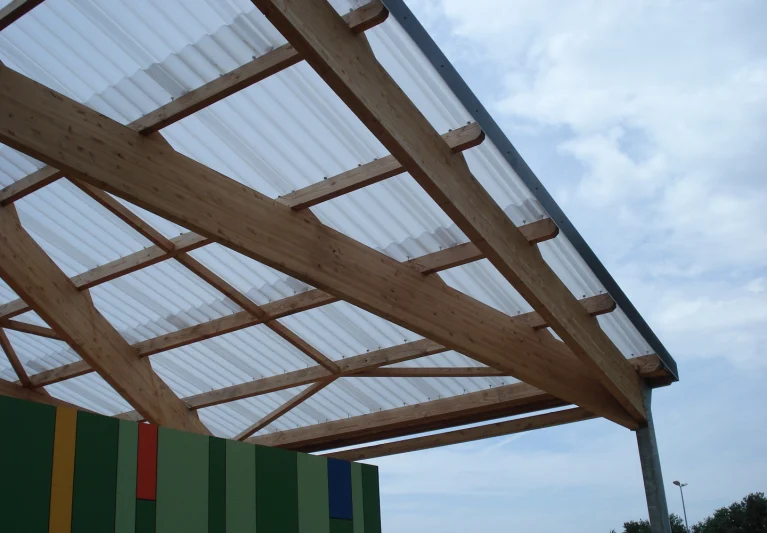
Polycarbonate is commonly used for transparent and translucent roofing because it can provide daylight transmission while offering a lightweight alternative to some traditional glazing materials. It is available in different profiles and constructions for various roofing applications.
Potential advantages include:
- Lightweight construction
- Good impact resistance
- Natural light transmission
- Different profile options
- Design flexibility
- Suitability for selected roofing applications
Polycarbonate can be used as a complete roof covering in some applications or incorporated into sections of a larger metal roofing system.
The correct product should always be selected according to the manufacturer's specifications.
What Is the Difference Between Transparent and Translucent Roofing?
Transparent roofing generally allows clearer light transmission and visibility, while translucent roofing diffuses incoming light and provides less direct visibility. Both can be used for daylighting, but the choice depends on the desired visual and lighting effect.
Transparent
Transparent materials may provide:
- Higher visual clarity
- Direct light transmission
- Greater visibility through the material
Translucent
Translucent materials may provide:
- Diffused daylight
- Reduced glare in some applications
- Less direct visibility
- Softer light distribution
For many roofing applications, completely clear material is not necessary.
Diffused daylight can sometimes provide a more comfortable result.
Where Can Transparent Roofing Be Used?
Transparent roofing can be used wherever additional daylight is needed without completely opening the space to the weather. Common applications include skylights, roof daylighting strips, carports, patios, walkways, warehouses and commercial buildings.
Its flexibility makes it useful in both residential and commercial projects.
Transparent Roofing for Homes
In homes, transparent or translucent roofing can bring daylight into patios, verandas, carports, corridors and extensions. The design should balance natural lighting with privacy, heat control and weather protection.
Common applications include:
Carports
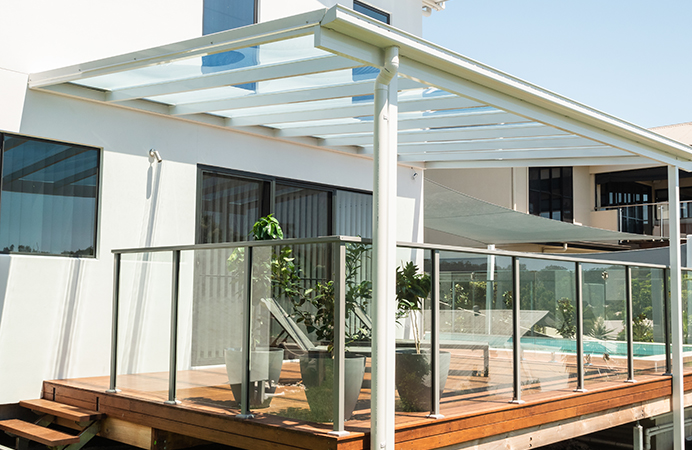
A polycarbonate roof can shelter vehicles from rain while allowing daylight to reach the parking area.
Patios
Transparent roofing can create a covered outdoor living area without making it feel completely enclosed.
Verandas
Daylight can enter from above while occupants remain protected from rain.
Walkways
Transparent roofing can create sheltered pedestrian routes while maintaining a brighter environment.
Extensions
Daylighting panels can be incorporated into selected sections of an extension roof.
Transparent Roofing for Commercial Buildings
Commercial buildings can use transparent roof sections to introduce daylight into large spaces such as warehouses, workshops and industrial facilities. The daylighting strategy should be designed together with ventilation, insulation and heat management.
Potential applications include:
- Warehouses
- Factories
- Workshops
- Retail premises
- Distribution centres
- Agricultural buildings
- Storage facilities
For large buildings, daylighting can be particularly useful because artificial lighting requirements can otherwise be substantial.
Transparent Roofing for Warehouses
Warehouse skylights and translucent roof panels can distribute natural daylight across large floor areas where wall windows may provide insufficient illumination. Their positioning should be planned to balance useful daylight with solar heat gain.
Consider using daylighting panels around areas such as:
- Storage aisles
- Picking areas
- Loading zones
- Workstations
- Circulation routes
The roof design should avoid excessive transparent coverage.
Transparent Roofing for Factories
Factories can benefit from roof daylighting where production floors require daytime illumination. However, heat-producing machinery, ventilation systems and the factory's operating conditions must be considered before selecting the roofing material.
Factories may have:
- Machinery
- Welding areas
- Furnaces
- Production equipment
- Exhaust systems
- High internal temperatures
In these environments, daylighting should be coordinated with ventilation and thermal management.
Transparent Roofing for Carports and Outdoor Spaces
Transparent roofing is particularly useful for outdoor structures because it can provide protection from rain and direct weather exposure without blocking daylight. Polycarbonate is commonly considered for carports, pergolas, patios and covered walkways.
A successful outdoor roofing system should consider:
- Frame strength
- Roof pitch
- Drainage
- Wind exposure
- Fixings
- Sheet movement
- UV exposure
- Maintenance
The supporting frame is just as important as the roofing panels.
Are Skylights Suitable for Kenyan Buildings?
Skylights can be suitable for buildings in Kenya when they are designed around local weather conditions, solar exposure, roof structure and drainage requirements. Their size and positioning should provide useful daylight without creating unnecessary heat or water-management problems.
For skylights Kenya projects, consider:
- Solar exposure
- Building orientation
- Roof pitch
- Rainfall
- Waterproofing
- Flashings
- Drainage
- Ventilation
- Maintenance access
The National Building Code 2024 should also be considered alongside the applicable engineering and construction requirements.
How Does Transparent Roofing Affect Heat?
Transparent roofing can allow solar radiation into a building, which may increase internal temperatures if the system is poorly designed. Daylighting should therefore be balanced with insulation, ventilation, material selection and the amount of transparent roof area.
This is one of the most important considerations when planning transparent roofing in sunny climates.
Potential heat-management measures include:
- Limiting transparent roof coverage
- Using suitable tinted or diffused materials
- Improving ventilation
- Using insulation where appropriate
- Selecting suitable roof orientation
- Positioning daylighting panels strategically
More daylight is not always better if it creates excessive heat.
How Durable Is Polycarbonate Roofing?
Polycarbonate roofing can provide durable performance when the correct product is selected, properly installed and maintained. Durability depends on factors such as UV protection, material specification, installation quality, environmental exposure and maintenance.
Before purchasing, confirm:
- UV protection
- Thickness
- Profile
- Manufacturer warranty
- Recommended fixing method
- Temperature limits
- Suitable applications
Different polycarbonate products can have different performance characteristics.
Is Transparent Roofing Waterproof?
Properly installed transparent roofing can provide weather protection, but waterproof performance depends on the roofing product, overlaps, fixings, flashings, roof pitch and installation quality.
Common causes of leaks include:
- Incorrect overlaps
- Poor flashing
- Incorrect fasteners
- Over-tightened screws
- Under-tightened fixings
- Damaged sheets
- Poor drainage
- Incorrect roof pitch
A good roofing installation should therefore consider the entire system rather than the sheet alone.
How Do You Maintain Transparent Roofing?
Transparent roofing should be inspected and cleaned periodically to maintain light transmission and identify problems early. Cleaning should be carried out using methods recommended by the manufacturer to avoid scratching or damaging the material.
Maintenance may include:
- Removing leaves
- Washing away accumulated dust
- Checking fasteners
- Inspecting joints
- Checking flashings
- Clearing gutters
- Looking for cracks
- Inspecting UV-protected surfaces
Dirty panels can significantly reduce the amount of useful daylight entering the building.
Transparent Roofing vs Traditional Roofing Sheets
Transparent roofing and conventional roofing sheets serve different primary purposes, and many projects use them together. Traditional metal sheets provide the main weatherproof roof covering, while transparent or translucent panels are strategically positioned to introduce daylight.
| Feature | Transparent/Translucent Roofing | Traditional Metal Roofing |
|---|---|---|
| Natural daylight | High | Very limited |
| Main purpose | Daylighting | Primary roof covering |
| Privacy | Product-dependent | High |
| Solar heat | Requires consideration | Lower direct transmission |
| Typical application | Skylights and daylighting | Main roof |
| Design role | Daylighting feature | Main weather barrier |
A combination of both can provide an effective balance.
What Are the Disadvantages of Transparent Roofing?
Transparent roofing can provide useful daylight, but it also has potential disadvantages including solar heat gain, glare, surface dirt and the need for careful installation. These factors should be considered during design rather than after installation.
Potential disadvantages include:
- Heat gain
- Glare
- Reduced privacy
- Dirt accumulation
- Potential material degradation
- More demanding cleaning
- Incorrect installation causing leaks
These disadvantages do not necessarily make transparent roofing unsuitable.
They simply highlight why material and design selection matter.
Common Transparent Roofing Mistakes
Many transparent roofing problems result from poor positioning, excessive panel coverage, unsuitable fixing methods or inadequate waterproofing. These mistakes can reduce both the daylighting benefits and the roof's overall performance.
Avoid:
Installing too much transparent roofing
Too much daylighting can result in excessive heat.
Ignoring the sun
Consider solar exposure before deciding where to position panels.
Using unsuitable fasteners
Fasteners should be compatible with the roofing system.
Poor sealing
Joints and roof penetrations require appropriate detailing.
Ignoring drainage
Water should flow away from the roof efficiently.
Walking directly on unsupported panels
Follow the manufacturer's safety and installation requirements.
Using abrasive cleaning materials
Scratches can reduce appearance and potentially affect light transmission.
Failing to inspect the roof
Small problems can develop into major leaks.
How Do You Choose Transparent Roofing?
Choose transparent roofing based on light transmission, material type, UV protection, thickness, profile, thermal requirements, structural compatibility and installation conditions. The best material is one that provides the required daylight without compromising the roof's other functions.
Before purchasing, ask:
- How much daylight is required?
- Should the light be clear or diffused?
- Will the roof receive strong direct sunlight?
- Does the product have UV protection?
- Is the profile compatible with the existing roof?
- What fixing system is required?
- How will the material be supported?
- How will water drain around the panels?
- How will the roof be cleaned?
- Can the material withstand the expected environment?
How Should Transparent Roofing Be Positioned?
Transparent roofing should be positioned where it provides useful daylight to the occupied areas rather than simply maximising the amount of transparent material. The layout should also account for heat, glare, structural support and drainage.
For commercial buildings, consider placing daylighting panels over:
- Work areas
- Circulation routes
- Storage areas
- Loading zones
For homes, suitable locations may include:
- Patios
- Carports
- Stairwells
- Covered walkways
- Verandas
The correct position depends on the building design.
How Can Transparent Roofing Improve Building Design?
Transparent roofing can become an architectural feature rather than simply a functional component. Carefully positioned skylights, roof strips and polycarbonate sections can add visual interest while improving daylight levels.
Design possibilities include:
- Linear skylights
- Narrow daylighting strips
- Large roof panels
- Curved polycarbonate roofs
- Canopies
- Feature roof sections
The strongest designs generally use transparency selectively.
Frequently Asked Questions About Transparent Roofing
Transparent roofing is a practical daylighting solution when its benefits and limitations are considered together. Material selection, roof design, solar exposure, drainage and installation quality all influence the final result.
What are the benefits of transparent roofing?
The main benefits are natural daylight, potentially reduced daytime lighting use, brighter spaces, design flexibility and weather protection for outdoor structures.
Is polycarbonate good for roofing?
Polycarbonate can be suitable for many roofing and daylighting applications because of its light weight, impact resistance and daylight transmission. The correct product must be selected for the intended use.
Are skylights suitable for Kenya?
Yes, skylights can be suitable when properly designed for solar exposure, rainfall, roof structure, drainage and heat management.
Does transparent roofing reduce electricity costs?
It can reduce reliance on artificial lighting during daylight hours, but the actual energy savings depend on the building's design, occupancy and lighting controls.
Does polycarbonate roofing make a room hot?
It can contribute to solar heat gain. The effect depends on the material, light transmission, roof orientation, ventilation, insulation and amount of transparent roofing.
How long does polycarbonate roofing last?
Service life varies according to product quality, UV protection, installation, environment and maintenance. Manufacturer specifications should be checked for the particular product.
Is transparent roofing waterproof?
A properly designed and installed system can provide weather protection, but waterproofing depends on the roofing material, fixing, overlaps, flashings, pitch and drainage.
What is the difference between transparent and translucent roofing?
Transparent materials provide clearer light transmission and visibility, while translucent materials diffuse light and reduce direct visibility.
Where can transparent roofing be used?
It can be used for skylights, warehouses, factories, carports, patios, pergolas, walkways, entrance canopies and other structures requiring daylight.
Can polycarbonate roofing be used for carports?
Yes. Polycarbonate is commonly considered for carports because it can provide weather protection while allowing daylight into the covered area.
How do you clean polycarbonate roofing?
Use gentle cleaning methods and follow the manufacturer's recommendations. Avoid abrasive tools or chemicals that could damage the surface.
What are the disadvantages of transparent roofing?
Potential disadvantages include heat gain, glare, dirt accumulation, reduced privacy and the need for careful installation and maintenance.
Conclusion
Transparent roofing provides a practical way to introduce natural daylight into residential, commercial and outdoor spaces while maintaining overhead weather protection. Polycarbonate and other translucent roofing products can be incorporated strategically to improve daylight without requiring an entirely transparent roof.
The most important factors to consider are:
- Natural light requirements
- Material type
- UV protection
- Solar heat
- Roof orientation
- Roof pitch
- Drainage
- Waterproofing
- Structural support
- Installation
- Maintenance
- Long-term durability
For warehouses and factories, transparent roofing can form part of a wider daylighting strategy. For homes, it can improve patios, carports, verandas and walkways. For commercial architecture, carefully positioned skylights can combine functionality with modern design.
The key is controlled daylighting rather than simply maximising transparency.
Contact Burhani Hardware Dealers (BHD)
Email: burhanihardwaredealers@yahoo.com
Call/WhatsApp: +254 731 217 462 | +254 704 606 131
Visit: BHD, Industrial Area, Funzi Road, Nairobi, Kenya
Website: BHD Kenya
Explore the BHD range of polycarbonate roofing, roofing sheets and building materials for residential, commercial and outdoor projects.
Frequently asked questions

Written & reviewed by
BHD Kenya
Burhani Hardware Dealers (BHD Kenya) is a Nairobi-based supplier of polycarbonate roofing, Alucobond/ACP cladding, Perspex, WPC wall panels and steel products, serving contractors, fabricators and homeowners across Kenya.