Warped ACM Sheets: 2026 Guide to Uses, Prices & Specs | BHD Kenya

The "Warped Facade" Warning: Why Thinner ACM Sheets Ruin Building Valuation
Thinner Aluminium Composite Material (ACM) sheets often warp under Kenya’s sun and humidity, leading to facade failure, higher maintenance, and reduced building valuation. Choosing the correct gauge ensures long-term structural integrity, aesthetic appeal, and compliance with KEBS standards.
What Are ACM Sheets and How Are They Used in Kenya?
ACM sheets are lightweight, durable panels consisting of aluminium skins with a polyethylene core, widely used for commercial facades, signage, and decorative cladding in Kenya. Correct thickness is critical to prevent warping and maintain building value.
Aluminium Composite Material (ACM) sheets have become a standard in modern architecture across Kenya. From Nairobi’s commercial towers to coastal hotels in Mombasa, ACM panels provide a visually striking, low-maintenance exterior finish. Their lightweight nature makes them easy to transport and install, reducing labor costs and construction timelines. ACM sheets are particularly popular for façades, canopies, and even decorative interior walls in corporate offices.
Typical ACM thicknesses in Kenya range from 3mm to 6mm. While 3mm panels are the cheapest option, they are more susceptible to deformation under the intense equatorial sun. Nairobi’s moderate altitude offers slightly cooler temperatures, but cities like Mombasa experience high humidity and heat, accelerating thermal expansion and warping in thinner sheets.
Internal links:
-
Learn more about Alucobond Sheets catalog entry
-
Check related cladding solutions in Polycarbonate roofing blog
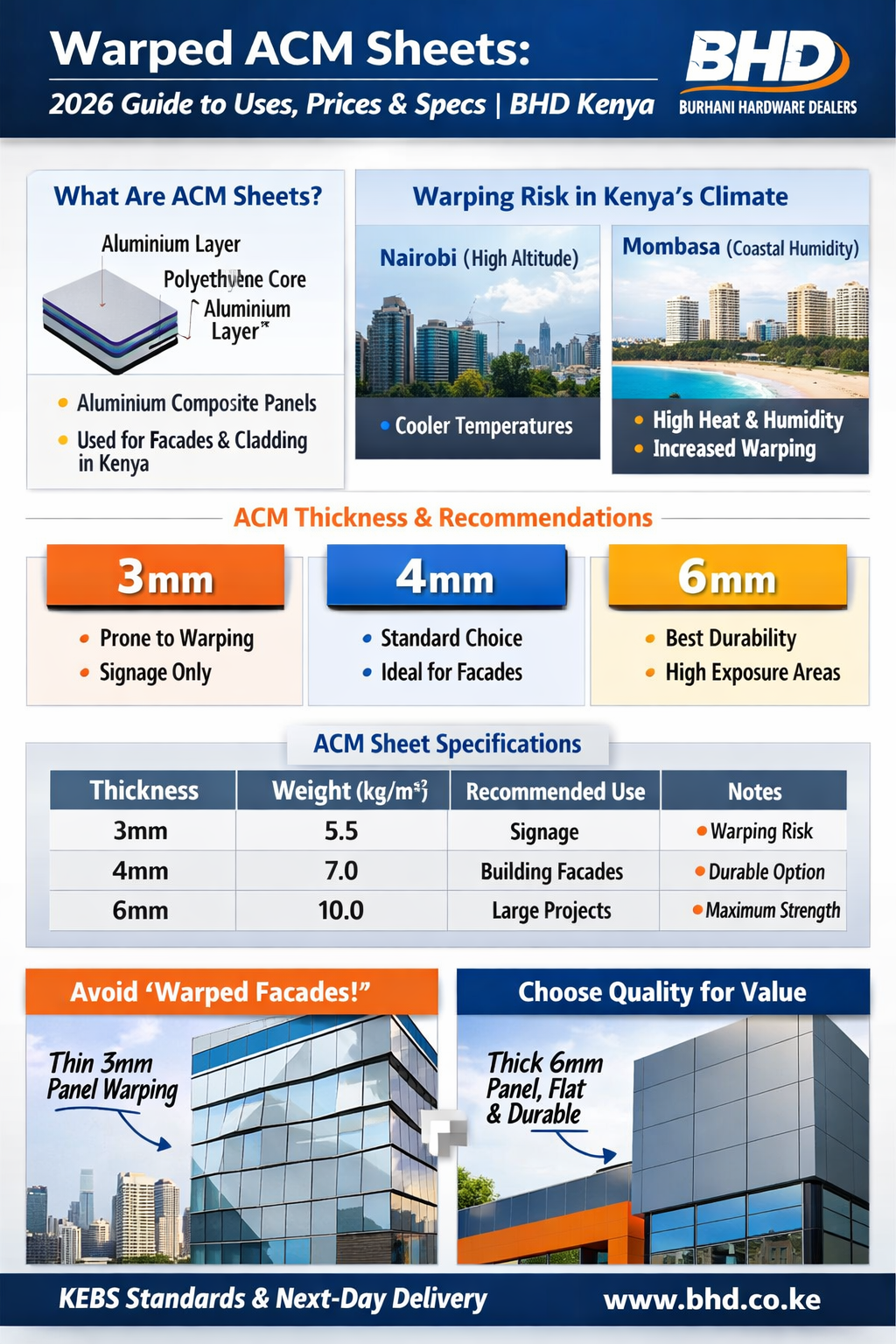 Infographic by BHD Kenya illustrating ACM sheet thickness, warping risks in different Kenyan climates, recommended uses, and specifications. Highlights the importance of choosing 4–6mm panels to maintain facade durability, aesthetics, and building valuation
The Dangers of Using Thinner ACM Sheets
Thinner ACM sheets (≤3mm) are prone to warping, peeling, and UV degradation, which reduces aesthetic quality and lowers property valuation. Thicker panels maintain flatness and structural integrity, protecting both facade and investment.
Using thin ACM sheets may appear cost-effective initially, but this short-term saving can quickly turn into long-term losses. When exposed to Kenya’s intense sunlight, thin panels expand and contract more readily than thicker alternatives, resulting in visible warping, ridges, and gaps. Humid conditions accelerate oxidation and delamination, especially along panel edges.
Warped façades not only compromise aesthetics but also risk water ingress. Even minor gaps allow rainwater to penetrate behind panels, causing corrosion of supporting frames and potential mold growth. Investors and potential buyers often perceive warped façades as a sign of poor construction quality, immediately reducing property value.
Internal links:
-
Explore Alucobond Sheets product page
-
Consider alternatives in Polycarbonate Sheets catalog
How Facade Warping Affects Building Valuation
A warped facade signals poor maintenance and substandard construction to investors and buyers, reducing market value by 5–15% depending on severity. Maintaining panel integrity preserves both curb appeal and asset valuation.
In Nairobi, commercial buildings using thinner ACM panels often face depreciation faster than those with correctly sized panels. Structural engineers report that even slight surface deformations on office towers or retail centers can reduce leasing interest. Tenants are less likely to invest in space with visible warping, impacting rental income and long-term ROI.
Case studies show that a 10-story commercial block with 3mm ACM sheets in Mombasa experienced early edge peeling and minor panel detachment within four years. In contrast, a similar building using 6mm panels maintained facade integrity for over a decade. Property evaluators consistently factor facade condition into their valuations, and warped façades frequently trigger price reductions during audits or resale assessments.
Selecting the Right ACM Sheet Thickness for Kenyan Conditions
For Kenya’s tropical and variable climate, ACM sheets of 4–6mm thickness offer optimal durability, heat resistance, and compliance with the National Building Code 2024. Thicker sheets prevent warping and maintain facade aesthetics.
Choosing the correct ACM thickness is not just about durability; it’s a strategic investment in the building’s long-term value. For most commercial and residential façades, 4mm panels provide adequate resistance to heat-induced deformation, while 6mm panels are recommended for high-exposure buildings or large surface areas.
ACM Sheet Specifications Table:
| Thickness (mm) | Weight (kg/m²) | Recommended Use | Notes |
|---|---|---|---|
| 3mm | 5.5 | Small signage | Risk of warping under direct sun |
| 4mm | 7.0 | Medium facades | Suitable for most commercial buildings |
| 6mm | 10.0 | Large facades/high exposure | Highest durability and value preservation |
In addition to thickness, consider local climatic conditions when selecting panels. Nairobi’s cooler temperatures allow slightly thinner panels for small façades, whereas Mombasa’s high humidity and intense sunlight necessitate 6mm panels to prevent warping and edge delamination.
Internal links:
Installation Best Practices to Avoid Warping
Proper installation, including panel spacing, fasteners, and support framing, minimizes warping. Using certified installers and following manufacturer guidelines ensures longevity and preserves building valuation.
Even high-quality panels can warp if installation is poor. Common mistakes include tight fastening, inadequate expansion gaps, and insufficient support framing. ACM sheets must be installed with fasteners compatible with aluminium and with spacing that allows for thermal expansion.
Zed Purlins and MS Tee steel sections provide rigid, reliable framing that reduces panel movement. Proper alignment, level installation, and certified installers ensure that panels remain flat and visually appealing for years, reducing the risk of costly repairs.
Internal links:
-
Use Zed Purlins
-
Reinforce with MS Tee sections
Cost vs. Value: Why Investing in Thicker ACM Pays Off
While thicker ACM sheets cost more upfront, they reduce maintenance, avoid facade repairs, and protect property value. Investors in Nairobi, Mombasa, and Kisumu consistently see higher ROI with proper materials.
The initial investment in thicker ACM sheets is quickly offset by lower maintenance and longer replacement cycles. For instance, a 10,000m² facade with 6mm panels may cost 15–20% more upfront but avoids recurring warping repairs every 2–3 years. This translates into higher rental income, lower repair bills, and a building that retains higher market value.
Comparisons of thin vs. thick ACM panels in Kenya show that investors who opted for 6mm panels see an estimated 10–12% higher valuation during resale, compared to properties with 3mm sheets. By protecting the façade, thicker panels also reduce insurance claims related to damage, further saving operational costs over time.
Conclusion: Protect Your Facade and Building Investment
Choosing the right ACM sheet thickness, installing professionally, and complying with KEBS and National Building Code 2024 ensures a long-lasting, visually appealing facade that maintains property value. Avoid the risk of warped, thin panels for sustainable building investment.
To safeguard your investment:
-
Always select ACM sheets 4–6mm thick for commercial façades
-
Work with certified installers
-
Ensure proper support framing with Zed Purlins or MS Tee sections
-
Regularly inspect panels for minor deformations
A well-installed and appropriately thick ACM facade not only enhances the building’s aesthetic appeal but also protects its market value, ensuring that your property remains competitive in Kenya’s commercial and residential sectors.
Internal links recap:

Written & reviewed by
BHD Kenya
Burhani Hardware Dealers (BHD Kenya) is a Nairobi-based supplier of polycarbonate roofing, Alucobond/ACP cladding, Perspex, WPC wall panels and steel products, serving contractors, fabricators and homeowners across Kenya.